
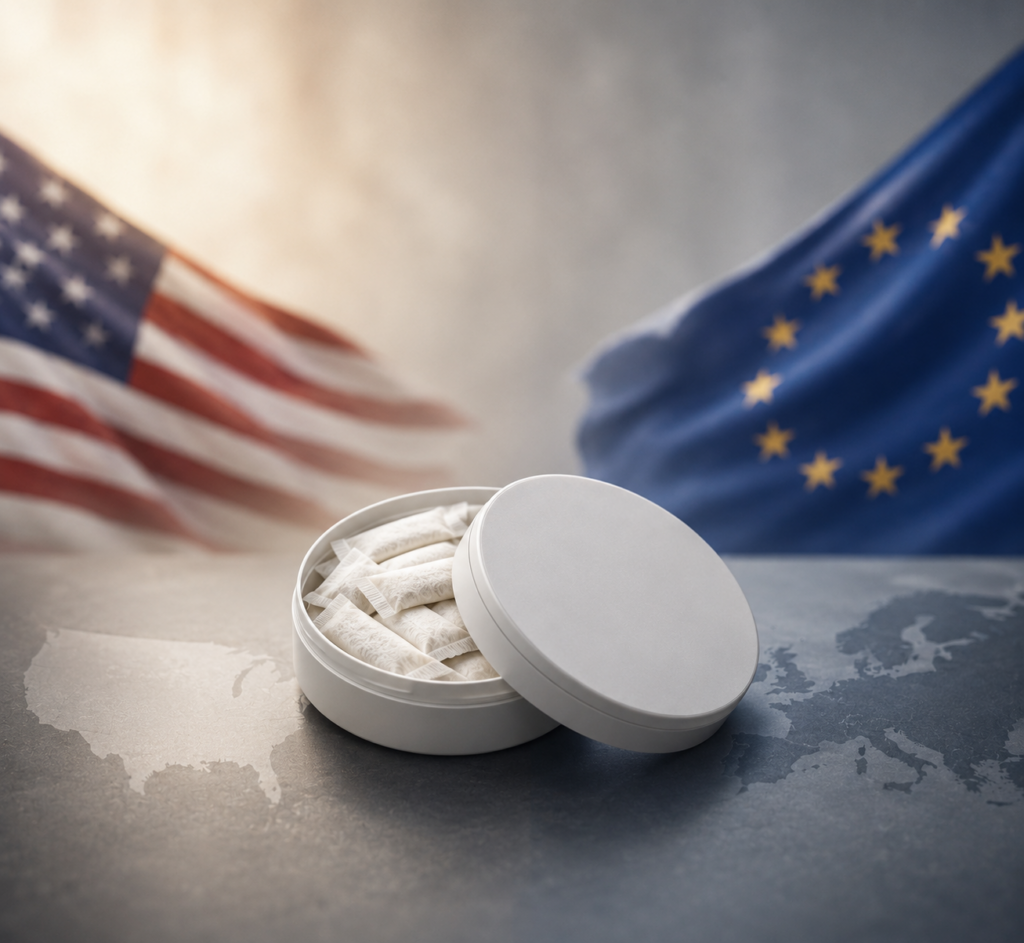
Just last week, the US Food and Drug Administration (FDA) authorised 11 new nicotine pouches to enter the American market, clearing them through the agency’s premarket tobacco product application (PMTA) process.
That brings the total number of FDA-authorised nicotine pouches to 43, of which 15 have been approved only in August, and 21 in the last year. 23 of the 43, including this latest batch went through a pilot programme the FDA built specifically to speed up pouch market application reviews.
While Washington D.C. is building faster lanes to get lower-risk nicotine products to adult smokers, Brussels keeps arguing they are as harmful as smoking and should be restricted, if not banned.
A program that delivers
The FDA’s nicotine pouch pilot program does what its name suggests. According to the agency, it has led to faster resolution of scientific issues, shorter turnaround for applicants responding to letters, and more efficient reviews overall.
The FDA is now rolling it out to its wider PMTA process. But this is not a rubber stamp, the FDA still requires evidence that a product delivers greater benefit to population health than risk, and for this batch of pouches, it found lower levels of harmful and potentially harmful constituents than in other smokeless tobacco products, several too low to even quantify!
The point here is that rigour and efficiency turned out not to be mutually exclusive, as Acting Director of the FDA’s Center for Tobacco Products Bret Koplow stated after approving 6 other nicotine pouches last year. The agency worked out how to keep the bar high while cutting the time it takes products to clear it, and every day that saves is a day sooner that an adult smoker can switch to something less harmful.
Europe can’t agree on pouches
The EU already has the best evidence in the world that nicotine pouches work, and it sits inside its own borders. Sweden crossed below 5% daily smoking, making it the first country to hit the WHO’s smoke-free threshold, 15 years ahead of the EU’s own 2040 target.
That shift follows a rise in nicotine pouch use, and the outcome is clear: Swedish men have a lung cancer mortality rate 61% below the EU average, and total cancer deaths there run 34% lower. This is precisely the mechanism the FDA cited when it authorised the pouches: a lower-risk product drawing smokers away from cigarettes. Yet, the European Commission’s own evaluation of its tobacco laws mentions Sweden mainly as a warning about nicotine pouch use, not as the case study that it is.
The reluctance to learn from the one EU country that solved the problem shows up in the rest of the bloc’s patchwork. France banned the sale, import, possession and use of oral nicotine products from 1 April, one of the strictest regimes in Europe. Belgium has prohibited manufacturing and marketing outright since 2022. Germany treats pouches as novel foods, producing a patchwork of regional bans rather than one national rule. Many other EU member states have no legislation on nicotine pouches yet. A revised Tobacco Products Directive that might finally harmonise the rules is expected to be proposed by the European Commission by the end of the year.
Do EU bureaucrats know better than the FDA?
That reluctance has a name: Health Commissioner Olivér Várhelyi. In September 2025, Várhelyi tweeted that “nicotine…causes cancer.” In a written response to MEP Kristoffer Storm, Várhelyi stated that smokeless nicotine products “do not reduce health risk” compared with cigarettes. When the Commission needed evidence to back his position that new nicotine products carry risks “comparable to smoking,” its report contradicted its own cited sources, which found that nicotine products without combustion carry low risk compared with cigarette smoking.
A 2025 survey of MEPs found the share who consider novel nicotine products at least as harmful as smoking rose from 19% to 33% in a year. That matters because those same MEPs will vote on the EU’s next tobacco control framework, one drafted by Várhelyi’s own department, DG SANTE, before it reaches Parliament and Council.
Science, not ideology, should decide the future of a product that is much safer than cigarettes. If the FDA can be rigorous and fast, European policymakers can be held to the same standard.


 EN
EN  EU
EU  FR_BE
FR_BE  NL_BE
NL_BE  CS
CS  NL_NL
NL_NL  EN_GB
EN_GB  FR
FR  IT
IT  PL
PL  PT
PT  ES
ES  SV
SV  DE_AU
DE_AU  DE_DE
DE_DE  DA
DA  EL
EL  FI
FI  RO
RO