


On 27-29 October, the World Health Organization’s Regional Committee for Europe is meeting for its 76th session to discuss its new health strategy. The goal of the meeting was to discuss plans on how to reduce the burden of the noncommunicable diseases (NCDs).
The importance of this goal is undeniable. However, how convincing is the WHO’s proposed strategy?
The action plan that was published prior to the meeting sets the tone for what would be discussed at the committee. Unfortunately, it comes as no surprise that the tobacco harm reduction community has little reason to expect its arguments to be considered.
The first red flag in the document is that it groups tobacco and nicotine products together, failing to acknowledge the differences between combustible cigarettes and less harmful nicotine alternatives. It seems that the tendency to shift the fight against combustion towards a fight against all nicotine products is once again on the table.
The problem with this approach is the failure to recognise the differences in risk between these products. So what does science say?
The evidence on the differences between smoking and less risky nicotine products is already available.
Studies of smokers who switch completely to vaping show substantial reductions in exposure to harmful chemicals. Some biomarkers among exclusive vapers are significantly lower than those of smokers and closer to the levels found in never-smokers.
The UK Office for Health Improvement and Disparities’ independent reports, based on over 100 studies by King’s College London, find that vaping poses substantially fewer health risks than smoking. Vaping is also one of the most commonly used quitting aids in England.
When it comes to products such as nicotine pouches, research suggests that they are among the lowest-risk oral nicotine products in terms of toxicant exposure, with levels of harmful and potentially harmful constituents far lower than cigarettes and similar to those found in nicotine replacement therapies (NRTs).
An updated Cochrane Review found that nicotine vaping helps more people quit smoking than traditional nicotine replacement therapy.
So why group products that could help smokers quit with combustible cigarettes and ignore their potential benefits?
There is plenty of scientific evidence supporting the need to differentiate between combustible cigarettes and less risky nicotine products, such as vapes and pouches. But what does the WHO do instead?
In the above-mentioned action plan the WHO states that tobacco is responsible for 1.2 million deaths annually across the WHO European Region. However, when it comes to newer nicotine products, it does not provide specific evidence on their impact on NCDs.
There is a clear disparity between the scientific evidence and the approach that WHO is taking. Why not at least leave the room for the discussion, instead of treating harm reduction as a taboo?
Especially when the WHO Framework Convention on Tobacco Control (FCTC) itself includes harm reduction in its definition of tobacco control under Article 1(d).
This is precisely why WVA launched its “Voices Unheard” campaign in response to COP11 in 2025. Leaving consumers and tobacco harm reduction out of public health discussions around nicotine is simply unfair, especially when so much scientific evidence is available.
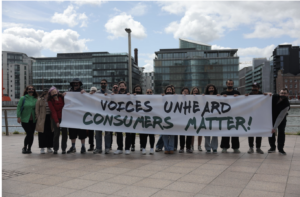
Ignoring the available evidence and refusing to openly discuss tobacco harm reduction will not help reduce smoking-related diseases.
If the WHO genuinely wants to improve public health, it should move away from its prohibitionist approach, recognise the differences between nicotine products and give harm reduction a place in its strategy.


 EN
 EU
 FR_BE
 NL_BE
 CS
 NL_NL
 EN_GB
 FR
 IT
 PL
 PT
 ES
 SV
 DE_AU
 DE_DE
 DA
 EL
 FI
 RO