

For years, public conversation around nicotine has been dominated by one word: youth. Every headline, press release, and policy proposal seems to revolve around the fear that a new generation is on the brink of nicotine addiction. But somewhere along the way, the conversation stopped being about evidence and started being about assumptions.
And that’s where the real problem begins.
The Data Doesn’t Match the Panic
If you listen to rhetoric, you’d think youth nicotine use is exploding. But when you actually look at the numbers, a very different story emerges. Youth cigarette smoking is at the lowest level ever recorded. Not just lower than the 1990s or early 2000s—lower than any time since the government started tracking it. Even youth vaping rates, which spiked several years ago, have been declining in recent surveys.
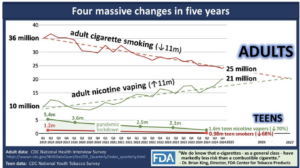
The Missing Group: Adults Who Still Smoke
are equal.
The Continuum of Risk Is Real
Non–combustible products—like nicotine pouches, heated tobacco, or vaping products—don’t involve burning tobacco. That doesn’t make them harmless, but it does make them significantly less harmful than smoking. This is the foundation of tobacco harm reduction: if someone can’t or won’t quit nicotine entirely, switching to a lower–risk product is a meaningful improvement for their health. This isn’t a fringe idea. Countries like Sweden have embraced it. As a result, Sweden now has the lowest smoking rate in Europe and one of the lowest rates of smoking– related disease. They didn’t get there through bans or fear campaigns. They got there by giving smokers alternatives.
The “Ring–Fencing” Argument Falls Apart
If these products only existed to keep people smoking, we wouldn’t be seeing these outcomes.
Youth Protection and Adult Harm Reduction Are Not Opposites
When Policy Ignores Science
If youth smoking is at historic lows, that’s a success story. It’s something to build on, not a reason to double down on policies that remove safer options for adults. Public health should be about reducing harm wherever possible.
• Keeping nicotine products out of the hands of minors
• Providing accurate information about relative risks
• Giving adult smokers access to lower–risk alternatives
Those goals are not contradictory. In fact, they reinforce each other.
The Real Question
The real question is whether it’s better for someone to smoke cigarettes—or to switch to something significantly less harmful.
For millions of adults, that difference matters. It can mean fewer hospital visits, fewer chronic illnesses, and in many cases, a longer life.
Ignoring youth data and adult needs at the same time doesn’t protect public health. It just creates policies that sound good in headlines but fail in the real world.
And when it comes to something as serious as smoking–related disease, we can’t afford to ignore the evidence.





 EN
EN  EU
EU  FR_BE
FR_BE  NL_BE
NL_BE  CS
CS  NL_NL
NL_NL  EN_GB
EN_GB  FR
FR  IT
IT  PL
PL  PT
PT  ES
ES  SV
SV  DE_AU
DE_AU  DE_DE
DE_DE  DA
DA  EL
EL  FI
FI  RO
RO