

ΕΝΑ πρόσφατος Το έγγραφο του ΠΟΥ που δημοσιεύθηκε λίγο πριν από την COP11 αποτελεί ένα ακόμη παράδειγμα του τρόπου με τον οποίο ο οργανισμός εντείνει τον φόβο και την παραπληροφόρηση αντί να υιοθετεί τα στοιχεία και την πρόοδο στον πραγματικό κόσμο. Ζητούν για άλλη μια φορά να αντιμετωπίζονται όλα τα προϊόντα καπνού και νικοτίνης με τον ίδιο τρόπο, αγνοώντας τον πλούτο των επιστημονικών δεδομένων και τις πολλαπλές εθνικές επιτυχίες που αποδεικνύουν ότι η μείωση της βλάβης μπορεί στην πραγματικότητα να μειώσει τα ποσοστά καπνίσματος και να σώσει ζωές.
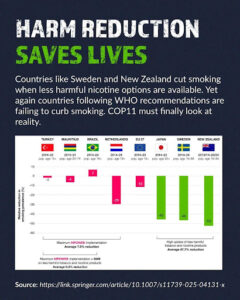
Ο ΠΟΥ παρουσιάζει τη μείωση της βλάβης ως μια εταιρική τακτική για την αποφυγή της ρύθμισης και την παράταση του εθισμού. Για άλλη μια φορά, αυτή η αφήγηση παραβλέπει εν γνώσει της την κρίσιμη γεγονότα: οι λιγότερο επιβλαβείς εναλλακτικές λύσεις, όπως τα ηλεκτρονικά τσιγάρα και τα φακελάκια νικοτίνης, αποτελούν αποτελεσματικά εργαλεία για τους ενήλικες που καπνίζουν, ώστε να διακόψουν το κάπνισμα ή να το αλλάξουν, όταν ρυθμίζονται κατάλληλα. Πραγματικά στοιχεία από χώρες όπως το Ηνωμένο Βασίλειο, η Νέα Ζηλανδία, η Σουηδία και άλλα μέρη του κόσμου καταδεικνύουν μια αξιοσημείωτη μείωση της επικράτησης του καπνίσματος που σχετίζεται με τις πολιτικές μείωσης της βλάβης. Αυτό δεν είναι απλώς μια τάση του κλάδου, αλλά μια παρατηρούμενη επιτυχία στη δημόσια υγεία. Επιπλέον, οι χώρες που ακολουθήστε τις συστάσεις του ΠΟΥ τα πάνε σημαντικά χειρότερα από εκείνα που δεν τα πάνε.
Επιπλέον, ο ΠΟΥ βασίζεται σε μεγάλο βαθμό σε ανησυχητικούς ισχυρισμούς σχετικά με το άτμισμα από νέους, υπερβάλλοντας τους κινδύνους και αγνοώντας πώς η αυστηρή προστασία των νέων και η λογική ρύθμιση μπορούν να αποτρέψουν την έναρξη της χρήσης νικοτίνης από τους μη καπνιστές εφήβους. Η επιμονή τους ότι κάθε χρήση νικοτίνης πρέπει να αντιμετωπίζεται με τον ίδιο τρόπο τα βάζει όλα στο ίδιο σύνολο, χωρίς να αναγνωρίζει την πολύ χαμηλότερη βλάβη της νικοτίνης όταν δεν καίγεται με καπνό. Απορρίπτουν την πραγματικότητα ότι οι καπνιστές που στρέφονται σε άτμισμα ή σακουλάκια μειώνουν την έκθεσή τους σε τοξικές ουσίες σε τεράστιο βαθμό.
Η μελέτη διαιωνίζει παλιούς μύθους σχετικά με τις γεύσεις που ωθούν την κατανάλωση τσιγάρων από τους νέους, αλλά παραλείπει να αναφέρει ότι αυτές οι γεύσεις αποτελούν σημαντικό μέρος της ικανοποίησης των ενήλικων καπνιστών που απεγνωσμένα θέλουν να κόψουν τα τσιγάρα. Οι γενικές απαγορεύσεις των γεύσεων ωθούν τους χρήστες προς τις μη ρυθμιζόμενες αγορές ή πίσω στο κάπνισμα. Η στάση του ΠΟΥ σχετικά με τις γεύσεις βασίζεται στον φόβο, όχι στην επιστήμη.
Επιπλέον, η συνεχιζόμενη επιφυλακτικότητα του ΠΟΥ σχετικά με τα εργαλεία μείωσης της βλάβης αγνοεί τα ολοένα και πιο ισχυρά στοιχεία ότι αυτά τα προϊόντα ενισχύουν τα ποσοστά διακοπής του καπνίσματος, ξεπερνούν σε απόδοση την παραδοσιακή θεραπεία υποκατάστασης νικοτίνης και έχουν ως αποτέλεσμα καλύτερα αποτελέσματα για την υγεία. Η άρνηση υποστήριξης αυτών των πρακτικών εργαλείων βασίζεται σε ξεπερασμένη ιδεολογία και όχι σε μια ψύχραιμη αξιολόγηση των γεγονότων.
Το μεγαλύτερο πρόβλημα είναι η επίμονη εκστρατεία παραπληροφόρησης του ΠΟΥ. Επί χρόνια, εξισώνουν το άτμισμα με το κάπνισμα, υπερβάλλοντας σοβαρά τις βλάβες και απορρίπτοντας την ανεξάρτητη επιστήμη που δείχνει τα πλεονεκτήματά του. Αυτή η προπαγάνδα αποθαρρύνει τους καπνιστές από το να στραφούν και διακινδυνεύει να προσθέσει ζωές στο φόρο τιμής του καπνού.
Αντί να αποτελεί αξιόπιστο ίδρυμα δημόσιας υγείας, ο ΠΟΥ μπλοκάρει επανειλημμένα την πρόοδο που θα μπορούσε να σώσει εκατομμύρια ανθρώπους από ασθένειες που σχετίζονται με το κάπνισμα. Η θέση τους βασίζεται στον φόβο, την προκατάληψη και την απροθυμία να υιοθετήσουν τη μείωση της βλάβης ως μια έγκυρη, βασισμένη σε στοιχεία στρατηγική. Αυτό έρχεται σε αντίθεση με την πραγματικότητα που αντιμετωπίζουν οι καπνιστές και οι υπεύθυνοι χάραξης πολιτικής για τη δημόσια υγεία παγκοσμίως, οι οποίοι βλέπουν τη μείωση της βλάβης να λειτουργεί.
Η COP11 ξεκινά την επόμενη εβδομάδα. Ήρθε η ώρα οι υπεύθυνοι χάραξης πολιτικής να απαιτήσουν από τον ΠΟΥ να σταματήσει να διαδίδει παραπληροφόρηση και να αρχίσει να βασίζεται σε πραγματικά στοιχεία. Η μείωση της βλάβης είναι αποδεδειγμένη και σωτήρια. Χρειαζόμαστε την αποκατάσταση της κοινής λογικής στον έλεγχο του καπνού.



 EL
EL  EU
EU  FR_BE
FR_BE  NL_BE
NL_BE  CS
CS  NL_NL
NL_NL  EN
EN  EN_GB
EN_GB  FR
FR  IT
IT  PL
PL  PT
PT  ES
ES  SV
SV  DE_AU
DE_AU  DE_DE
DE_DE  DA
DA  FI
FI  RO
RO